Timing-sensitive protected beach · From La Paz
Balandra Beach From La Paz: Is the Entry Effort Worth It?
A practical Balandra Beach guide covering the road from La Paz, changing entry windows and capacity, boat alternatives, shallow water, timing risk, and easier nearby beaches.
Reviewed and updated July 12, 2026. Conditions, fees, access systems, and transport practices can change.
Access Reality Check
The reward, the catch, and the effort
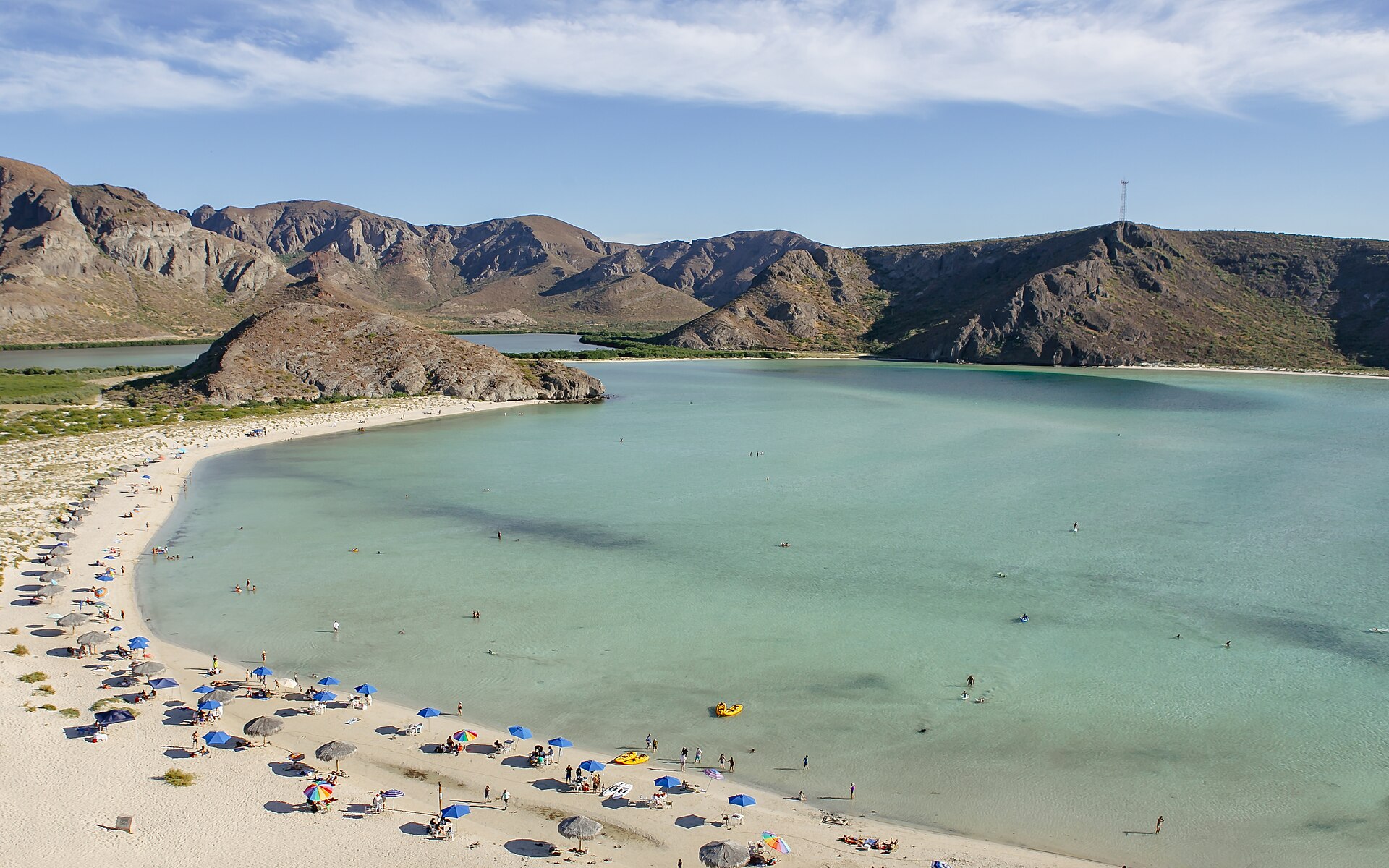
The reward: Extraordinarily shallow turquoise water, desert hills, mangroves, sandbars, and one of the most recognizable coastal landscapes near La Paz.
The catch: Balandra is a protected area with controlled access. Capacity, entry windows, closures, and visitor rules can change, so arrival timing is part of the destination.
Best practical base: La Paz
Worth it if…
- You are staying in La Paz and can organize the day around Balandra's current access rules.
- The landscape and shallow-water experience are more important than restaurants or beach-club facilities.
- You have a backup plan if land entry is full or conditions change.
Think twice if…
- You need a guaranteed late-morning arrival with no waiting or uncertainty.
- Your group expects food service, extensive shade, rentals, and urban-beach convenience.
- You would be deeply disappointed if access controls redirect you to another beach.
Balandra is easy to drive to and surprisingly easy to miss
From La Paz, Balandra looks like a simple coastal outing. The road is ordinary, the distance is manageable, and the famous turquoise bay seems to be waiting politely at the end.
The protected-area visitor system is the catch.
Balandra is not an unlimited-access beach club. Entry controls have been used to protect the area and manage capacity. The exact windows, limits, rules, and closure conditions can change, which means an old screenshot of opening hours is not enough.
The drive is simple. The timing is the trip.
Why Balandra is protected
Balandra is more than one photogenic beach. The protected area includes coastal wetlands, mangroves, dunes, desert vegetation, shallow bays, and wildlife habitat.
That ecological sensitivity explains why visitor capacity and behavior are managed more carefully than at a normal developed beach.
The restrictions are not an annoying side quest invented solely to ruin vacation mornings. They are part of what keeps Balandra from becoming another shoreline paved into submission.
How to reach Balandra from La Paz
Drive yourself
Driving offers the clearest control over departure time and the best ability to use a backup beach.
It works when you:
- verify the current access window
- leave with margin rather than aiming for the last possible minute
- understand that reaching the gate does not guarantee entry after capacity is met
- keep El Tecolote or another beach available
A rental car is especially useful when Balandra is one part of a larger La Paz coastal day.
Take a taxi or arranged transfer
A taxi removes driving and parking responsibility, but it does not remove capacity rules.
Arrange the return before entering. Confirm whether the driver will wait, return at a set time, or whether you will need to request another vehicle from an area with potentially inconsistent signal.
The taxi option is strongest for groups sharing the fare or travelers who do not want a car for the rest of the trip.
Visit by boat
Boat tours can present Balandra Bay from a different angle and may combine it with other coastal or island experiences.
Read the itinerary carefully. “Balandra” can mean:
- viewing the bay
- swimming from the boat
- stopping at a beach
- passing through as part of a larger tour
A boat excursion is not automatically equivalent to entering the principal land-access beach.
What happens when capacity is reached?
You use the backup plan.
That sounds obvious, yet many travelers treat Balandra as a single-point mission and then allow a full gate to destroy the day.
The smarter structure is:
- Check current official or local access information.
- Attempt Balandra during the appropriate window.
- If entry is unavailable, continue to El Tecolote or return toward another La Paz beach.
- Do not spend two hours parked in disappointment while the Sea of Cortez continues existing elsewhere.
What is the on-site experience actually like?
Balandra is known for extremely shallow water. Depending on tide and location, visitors can wade far into the bay. The water, sandbars, reddish desert hills, and mangroves create the visual payoff.
That same shallowness means the beach is not a classic deep-water swimming destination for everyone. Some visitors love the calm wading and scenery. Others arrive expecting immediate snorkeling depth or strong surf and discover they selected the wrong beach fantasy.
Bring:
- substantial sun protection
- drinking water
- food if permitted under current rules
- a way to pack out everything you bring
- footwear appropriate for hot ground or optional walks
Do not expect a complete restaurant-and-rental ecosystem inside a protected landscape.
The Mushroom Rock question
“El Hongo,” Balandra’s mushroom-shaped rock formation, is a symbol of La Paz. It is also only one small element of a much larger bay.
Do not trample sensitive areas or treat the rock as a theme-park prop that must be climbed, touched, and photographed from every possible angle. The value of Balandra is the whole landscape.
When is Balandra worth the effort?
Balandra earns the planning when:
- you are already staying in La Paz
- the shallow bay and desert scenery are central to your trip
- you can arrive during the current access window
- your schedule can accept a fallback
It becomes a poor fit when:
- your only available arrival is late and rigid
- you need guaranteed facilities
- the group dislikes early starts or uncertainty
- a closed gate would create an emotional international incident
A backup beach does not weaken the Balandra plan. It makes the plan adult-proof.
Balandra versus El Tecolote
Choose Balandra for protected scenery, shallow water, mangroves, and the iconic bay.
Choose El Tecolote for services, food, easier spontaneity, and a more conventional beach day.
Many travelers should attempt Balandra first and treat El Tecolote as the natural continuation of the same route.
Do you need a tour?
Not necessarily.
A tour earns its price when it adds:
- reliable transport
- a clear boat experience
- interpretation of the protected area
- useful stops beyond the land-access beach
- a schedule that fits your trip
A tour does not earn its price merely by placing “Balandra” in a product title.
Final decision
Balandra is worth the effort from La Paz, provided the effort is planned rather than dramatized.
Check the current access rules. Leave enough margin. Carry what you need. Keep El Tecolote ready.
The protected landscape is the attraction—and the reason you cannot always wander in whenever brunch releases you.
Where to stay for this route
Stay in La Paz and preserve several beach outcomes
La Paz is the correct lodging base for Balandra because the protected beach is only one possible outcome of the day. A good La Paz base also keeps El Tecolote, the Malecón, marina departures, and other coastal options available when capacity or weather changes the plan.
La Paz Centro and the Malecón
The strongest all-purpose base for restaurants, evening walks, city services, and access to taxis, tours, and the northbound coastal road.
Marina and Costa Baja area
A quieter resort-and-marina setting that suits travelers combining Balandra with boat excursions or a more self-contained stay.
Pichilingue corridor
A less central option that places travelers farther along the northern coastal route toward Balandra and El Tecolote, with fewer city conveniences.
Useful geographic context: The practical chain runs from La Paz Centro and the Malecón north toward the marina, Pichilingue, Balandra, and El Tecolote. Land-entry limits at Balandra make La Paz lodging flexibility more valuable than staying for a single beach promise.
Compare La Paz stays that keep the coastal road flexible
Use La Paz as the search area, then decide between the Malecón, marina-oriented lodging, and quieter northern options according to how you plan to reach Balandra.
Affiliate link: we may earn a commission at no additional cost to you.
Before you commit the day
What to confirm locally
- The current land-entry windows, capacity rules, closure notices, and prohibited items.
- Whether parking or public transport arrangements have changed.
- Weather, wind, and any protected-area restrictions in force that day.
- Whether your boat excursion enters Balandra Bay, lands on a beach, or only views the area from the water.
- What water, food, shade, and sun protection you need because facilities are intentionally limited.
The honest fallback
Easier alternative: El Tecolote
El Tecolote is farther along the same coastal road and is generally the easier answer when you want services, food, a broader conventional beach day, or a fallback after Balandra reaches capacity.
Plan the easier El Tecolote option
El Tecolote is the easier conventional beach choice when Balandra reaches capacity or when food, services, and a less controlled arrival matter more.
Compare La Paz stays for El Tecolote access →Affiliate link: we may earn a commission at no additional cost to you.
Research notes and sources
We use cautious language because route conditions and visitor systems change. These sources establish the destination context; confirm current operational details directly before traveling.